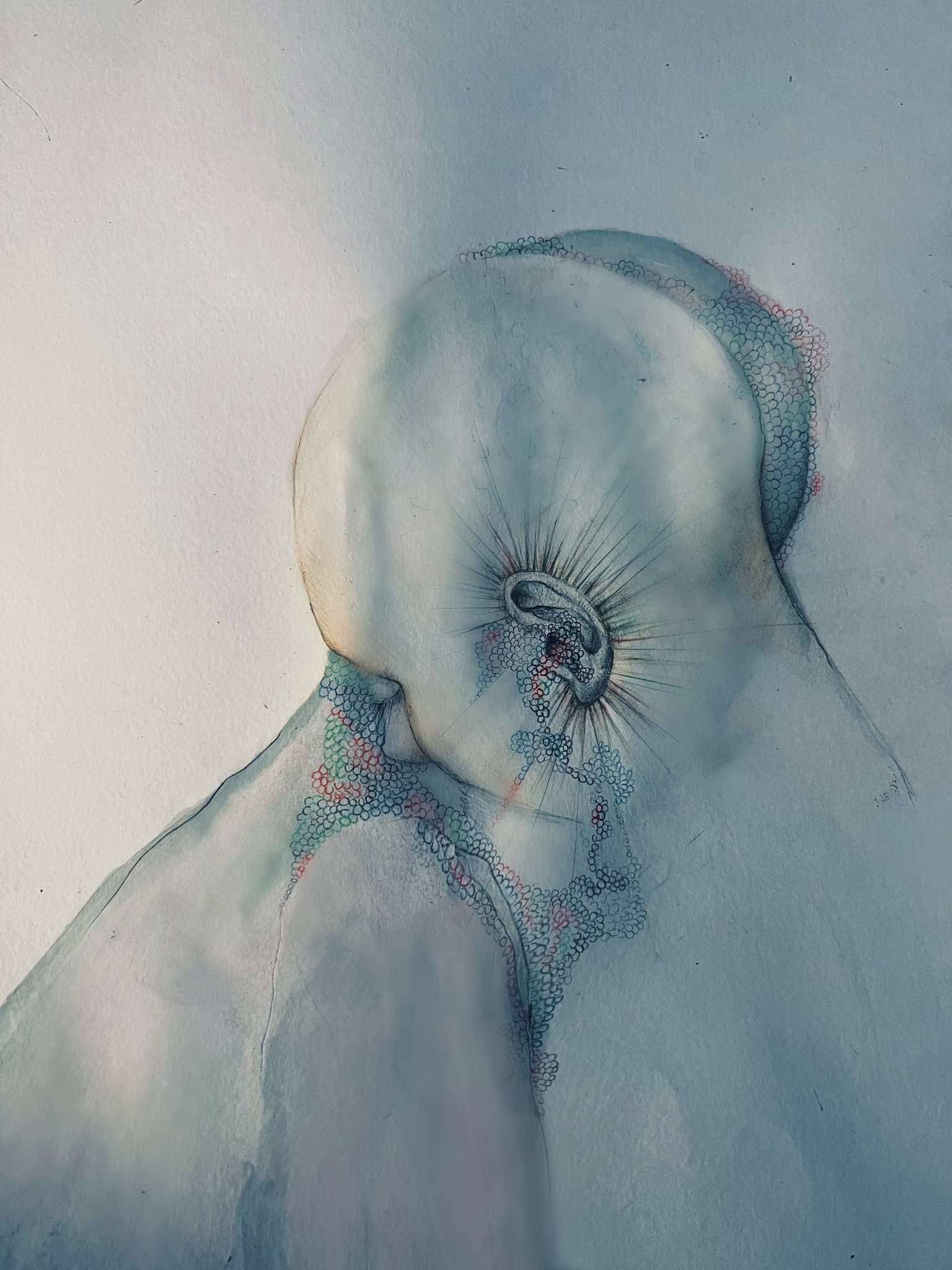
If you were to paint a scene from your earliest childhood memory, what would it depict, and why is it significant to you?
It’s a little dark. I’m not even sure it’s worth telling, but I’ll try.
I’m around seven or eight years old, trying to fall asleep in a very small room — my grandmother’s house, where I spent most of my time. She had lost her only son, my father, and taking care of me was, I think, her way of easing that pain. Though, looking back, I’m not sure, I really helped.
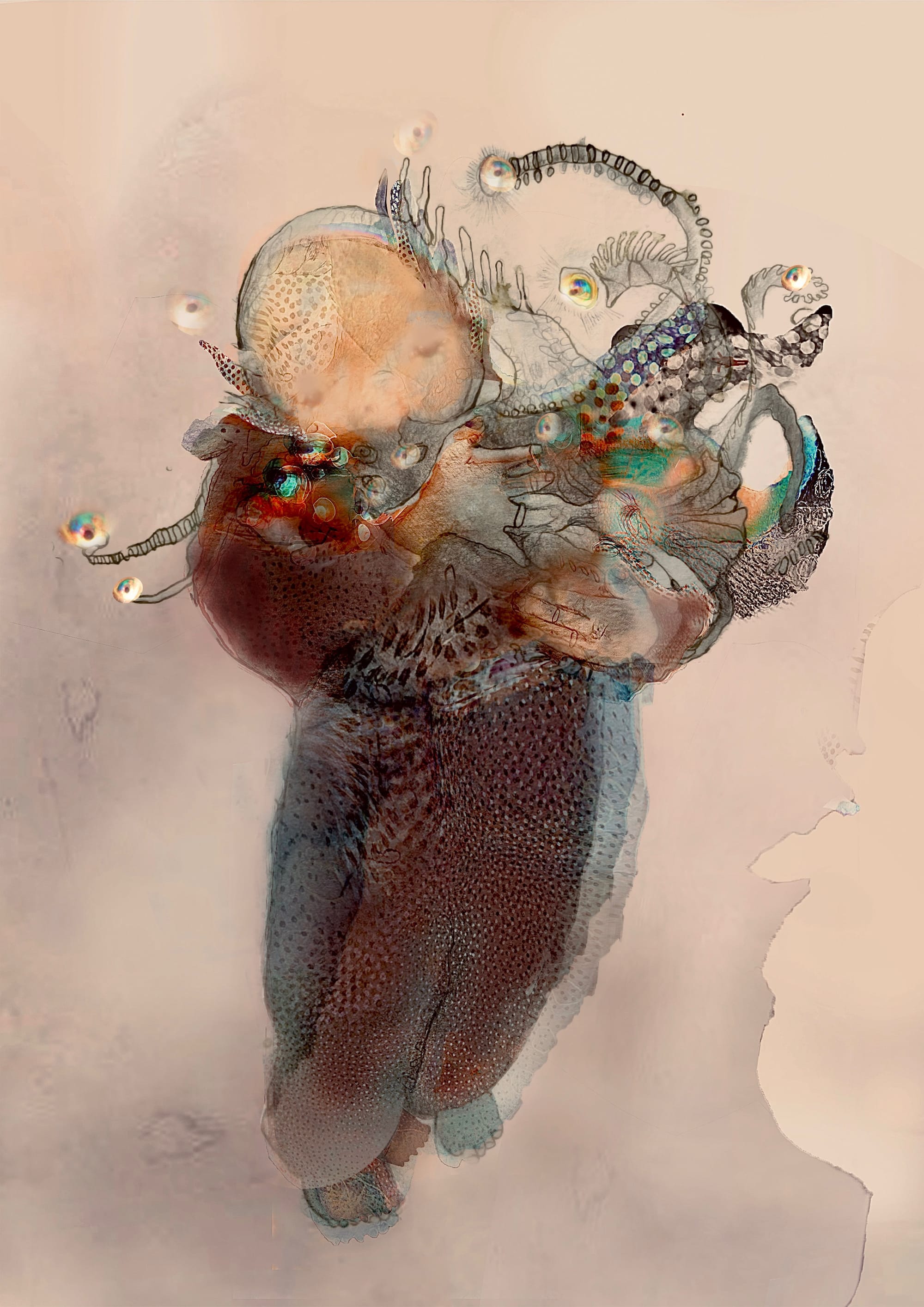
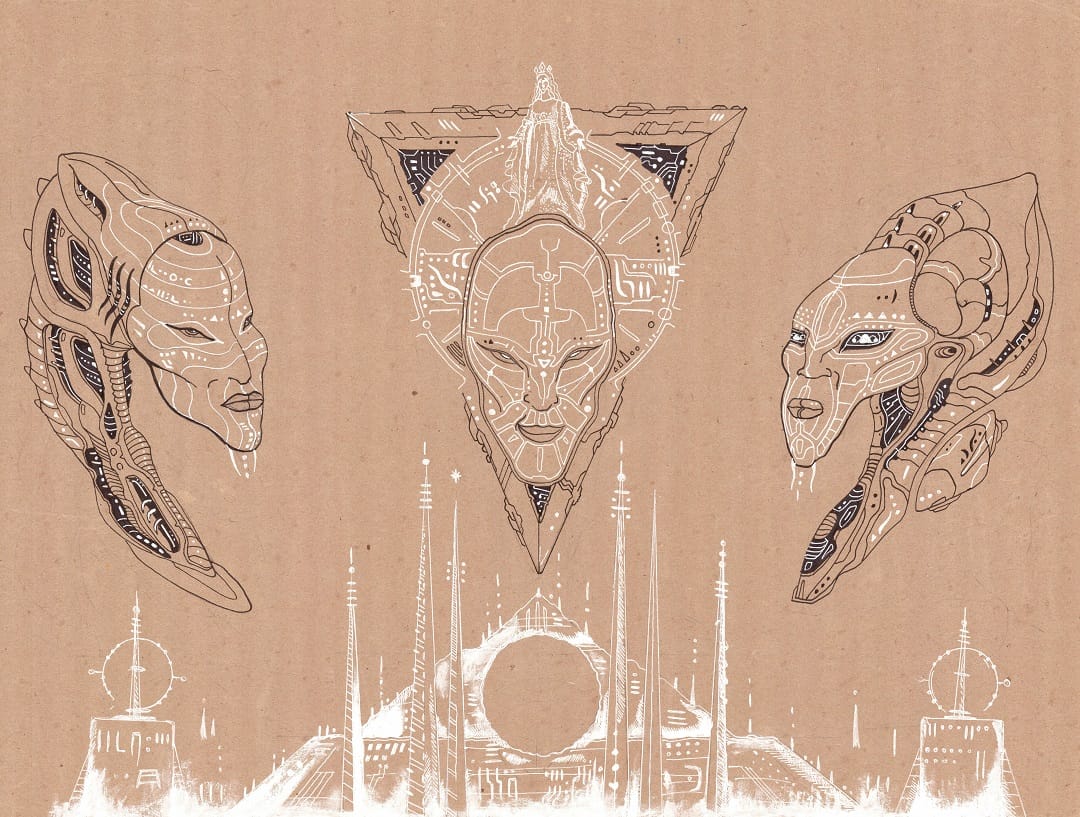
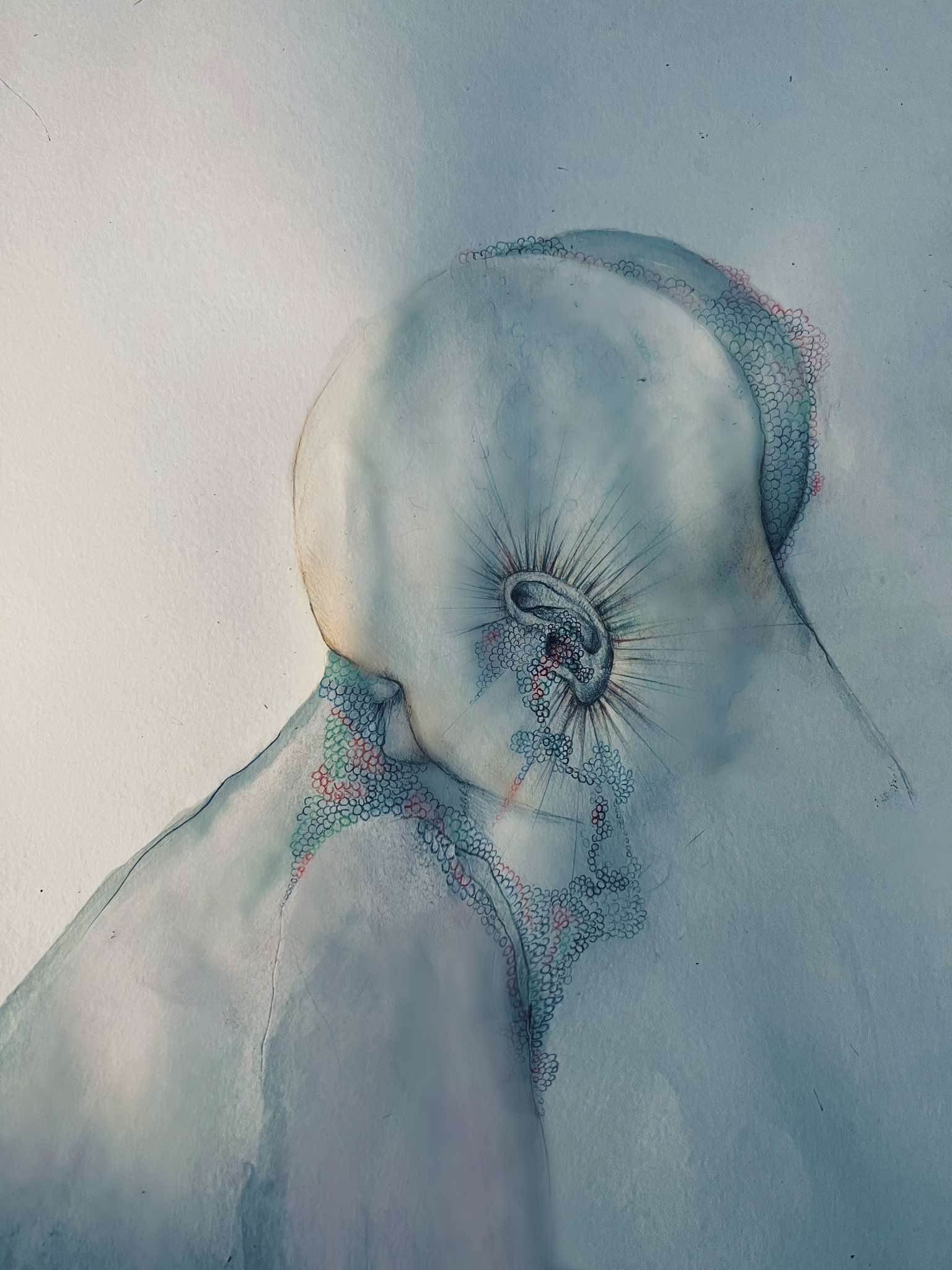
I remember being left alone in that tiny room, to fall asleep in front of a strict and silent God. The walls were covered with countless religious icons, and among them, photos of my father. The light in the room was not dark, not bright — something in between. On the parts of the wall without icons, the textured wallpaper created shapes and patterns in the half-light. I used to stare at them to distract myself, turning them into ornaments, figures, sometimes whole imaginary creatures.
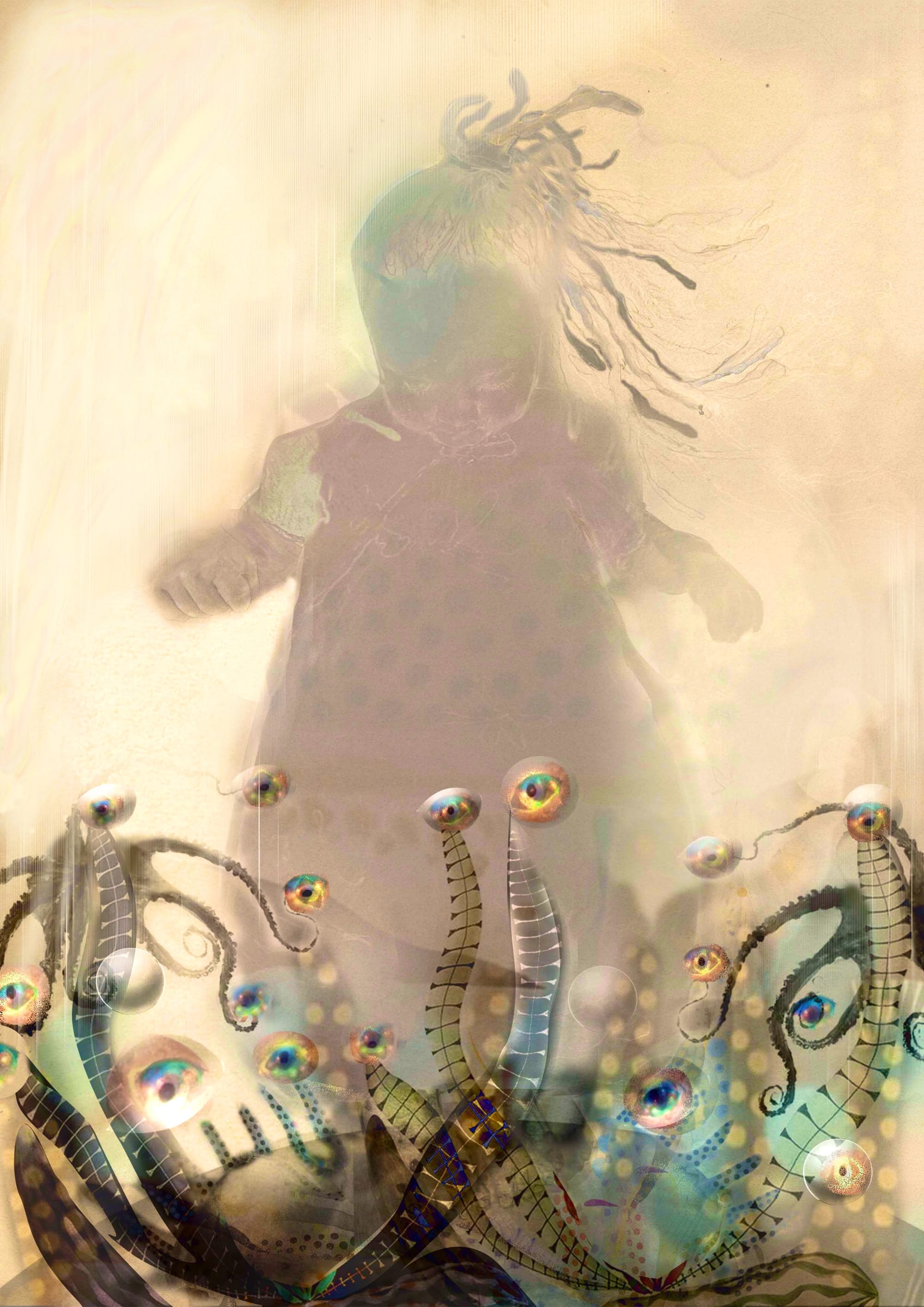
I was told — and truly believed — that taking one’s own life was a sin God hardly forgave, so she prayed harder, longer. When she left the room, there was the smell of candles and a heavy sense of guilt — a child’s confused faith, twisted by fear, and a deep emptiness that felt like there was no air left to breathe.
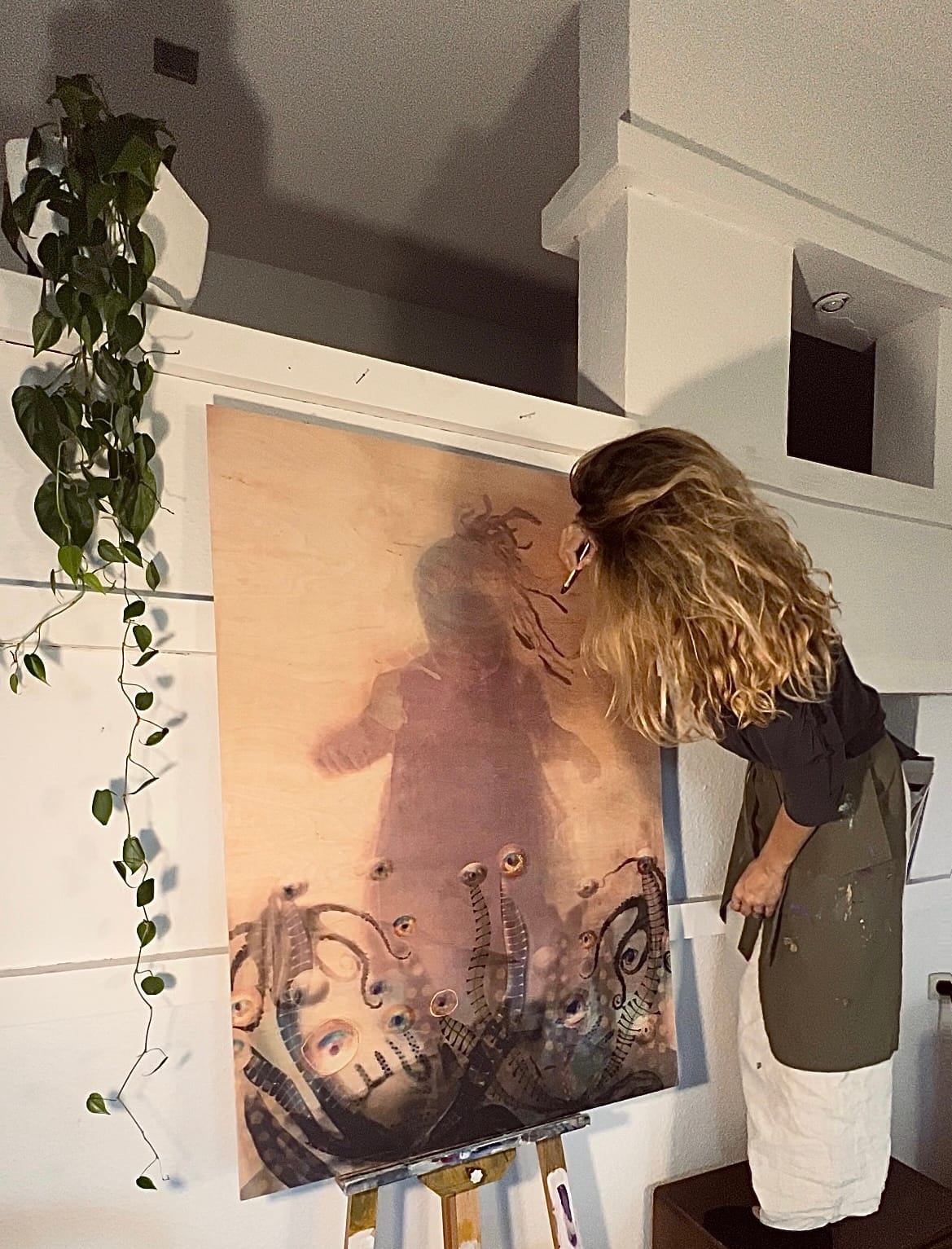
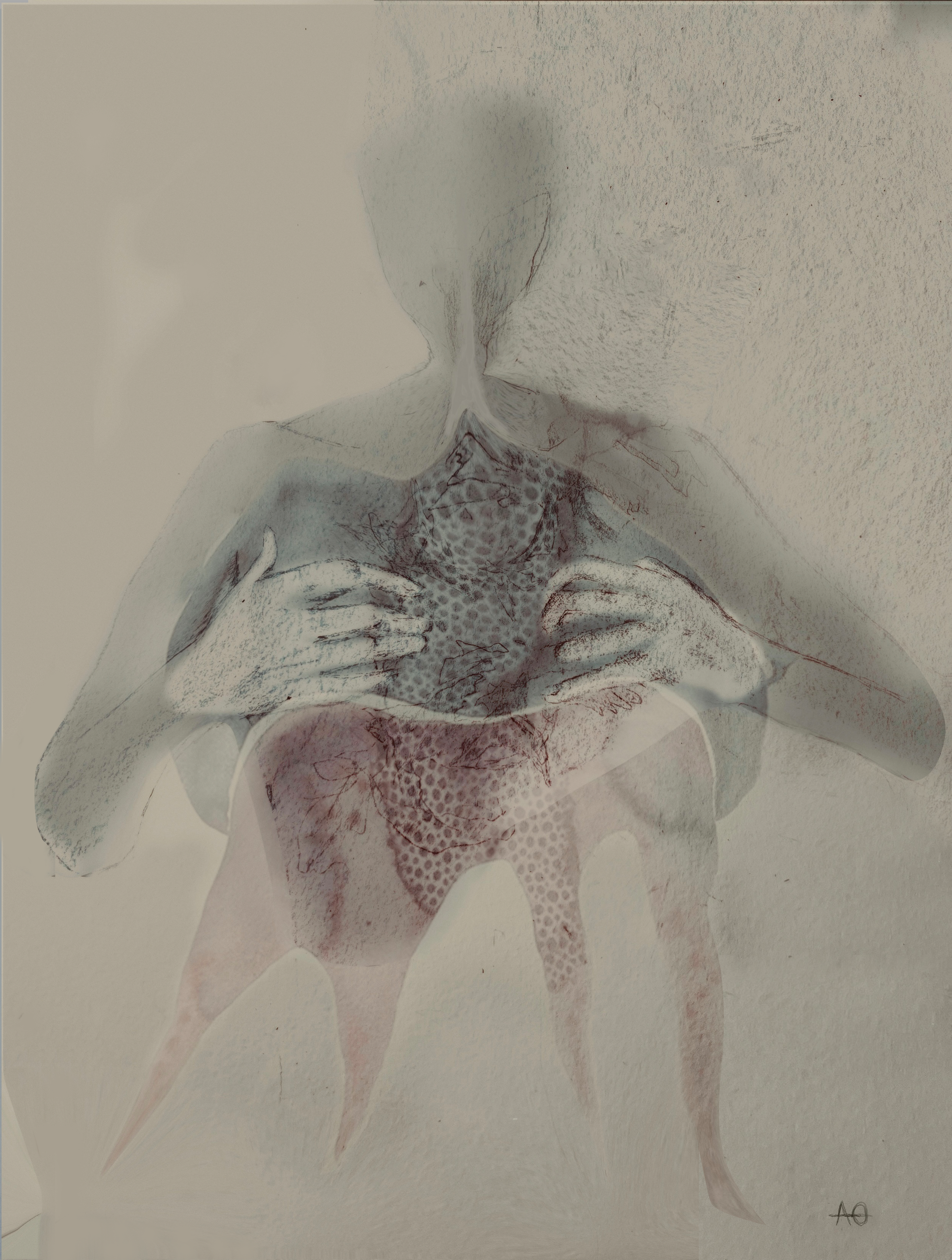
Falling asleep was heavy, so I built another imaginary world in my mind, one where I could feel safe. I spent so much time there that it became a habit. Teachers at school would often say, “Stop daydreaming, come back down to earth.” But I was dissociated, and reality felt quite uninteresting. If I were to dare to paint that scene today, it would be that small room and my little self inside — because it’s the one place I’ve always avoided looking back at. I believe we can only overcome our fears by facing them. To paint it would be my way of saying sorry to that little seven-year-old version of myself I once abandoned and treated destructively, who still lives somewhere inside.
If you could revisit one specific moment from your childhood, which moment would it be?
Before those times, there was another life and another house — a white house filled with sunlight. I used to play hide-and-seek there with my mother. My younger sister and I would run through the tall, sunlit rooms, bumping into furniture and each other as we tried to touch the walls and win. I was five, and she was three — curly hair, chubby, with green eyes. She always hid in the same spot, convinced no one could see her. — but my mother and I pretended not to notice, letting her believe she was invisible. She sat facing the wall, squeezed between two benches, her tiny, fluffy, cloud-like white legs peeking out.
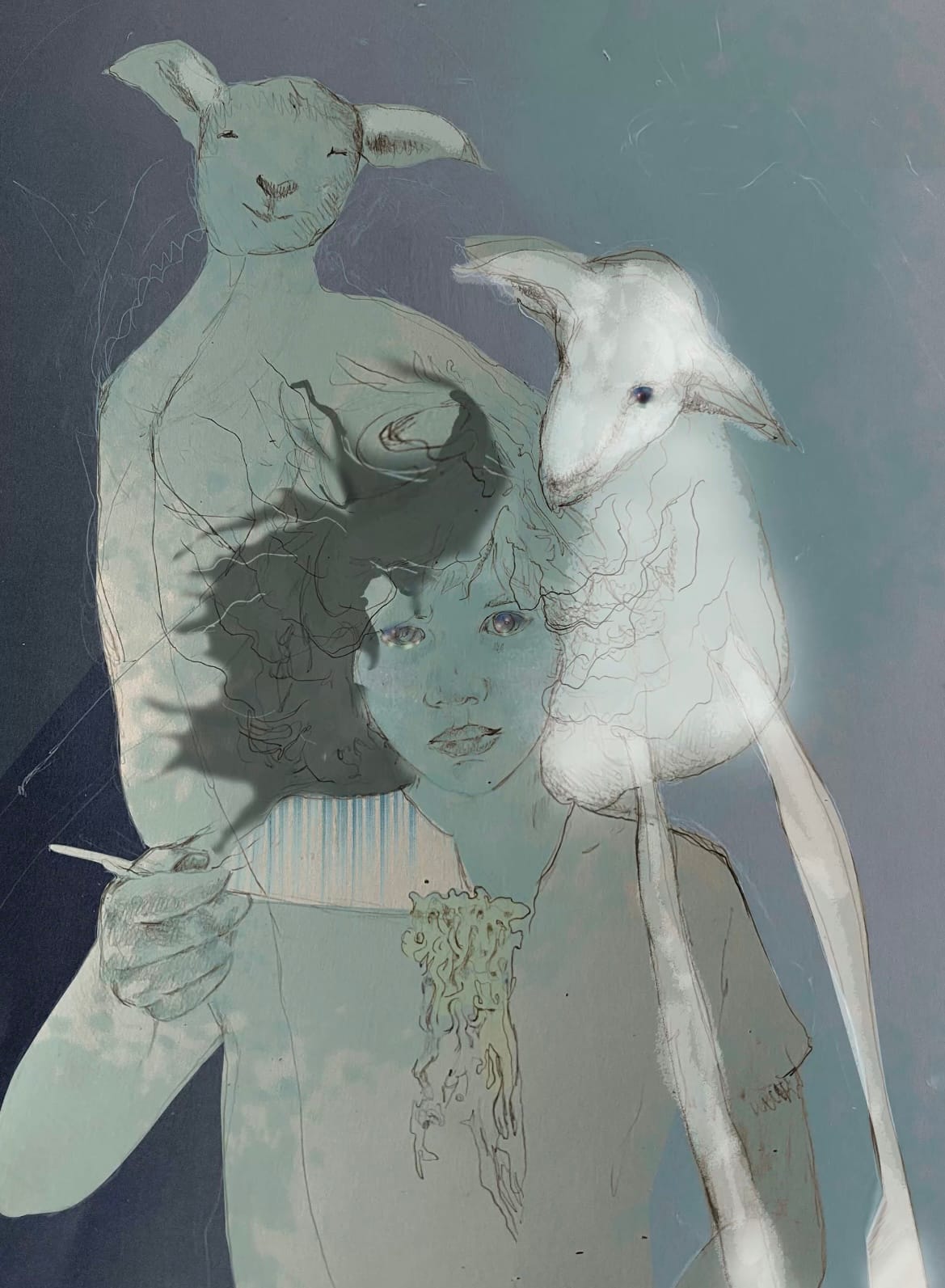
When she “won,” she would always ask to play again, her request to continue playing would last endlessly…
Looking back at these moments, my mind is drawn to repetition —
I realized that even in my search for calm, I found it in repetition. Perhaps the magic — the hidden happiness —Doing what matters to you with care, patience, discipline, and love — fully present in the moment.
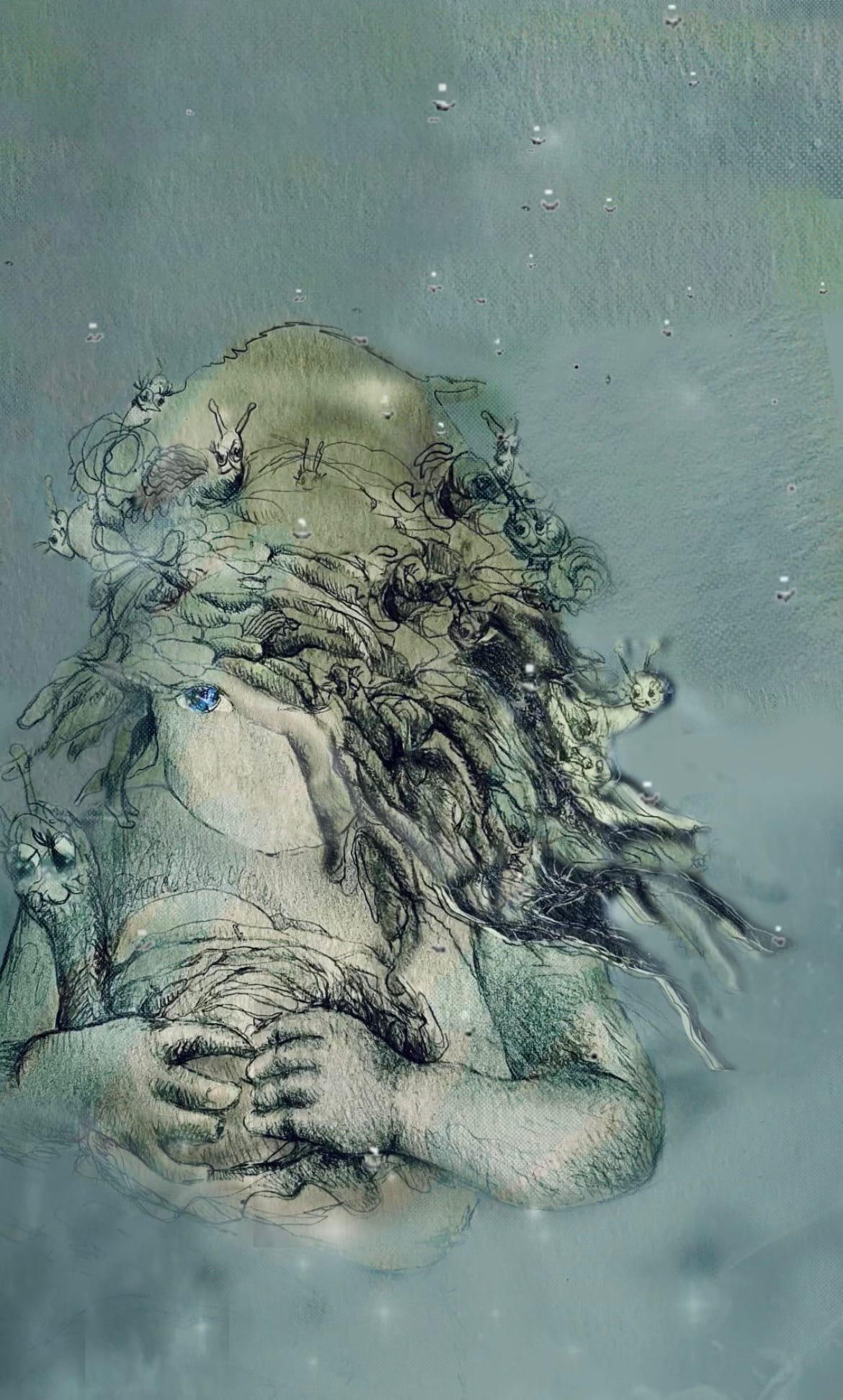
If I were to give a soundtrack to that hide-and-seek scene, it would be a minimalist, looping piece by Steve Reich or Terry Riley — where change feels almost imperceptible, and yet, in that subtle shift, a kind of magic unfolds.
Reflecting on your childhood, what smells, sounds, or textures evoke the strongest memories for you? How do these sensory experiences influence your creative process?
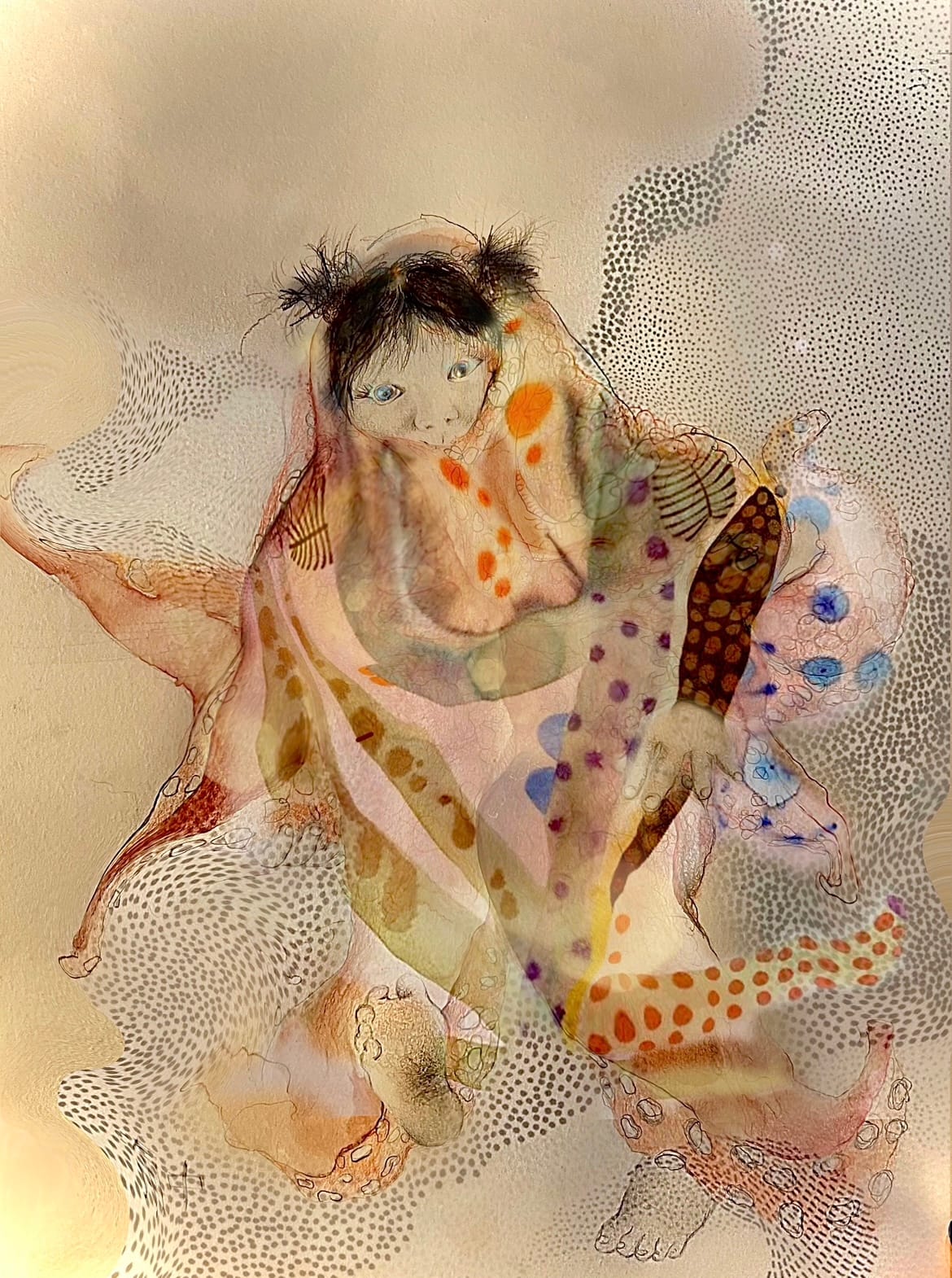
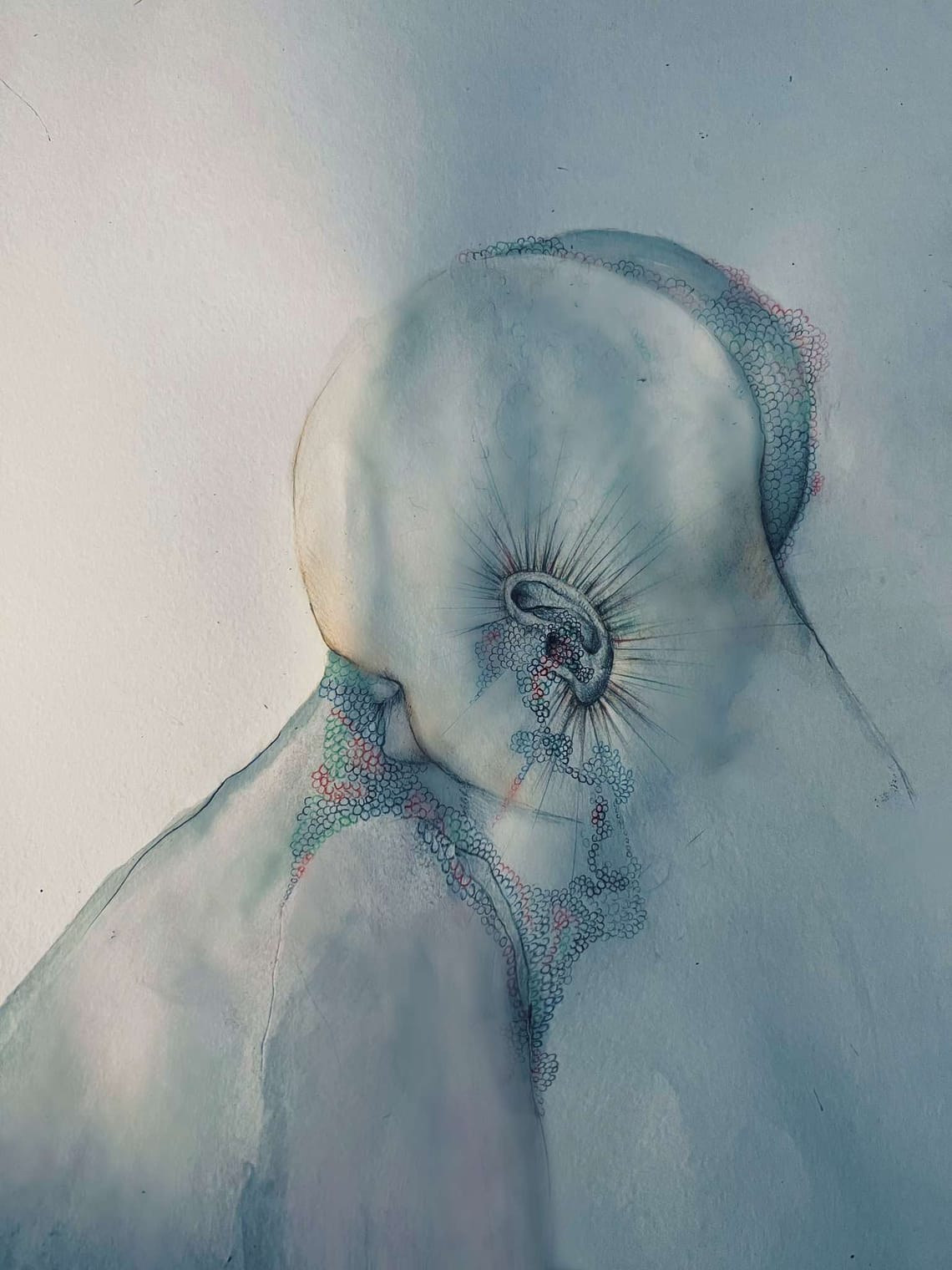
The taste, color, and scent of ripe, sliced apricots… the sound of crickets on a summer night in the village… the lines of veins on leaves… the crunch of dried red cherry leaves underfoot in autumn. The soft tapping of pine needles on the roof at night — which I used to imagine as little ghosts.
The tear-scented flowers, the smell of candles …
The scent of spring… the morning dew on the grass.
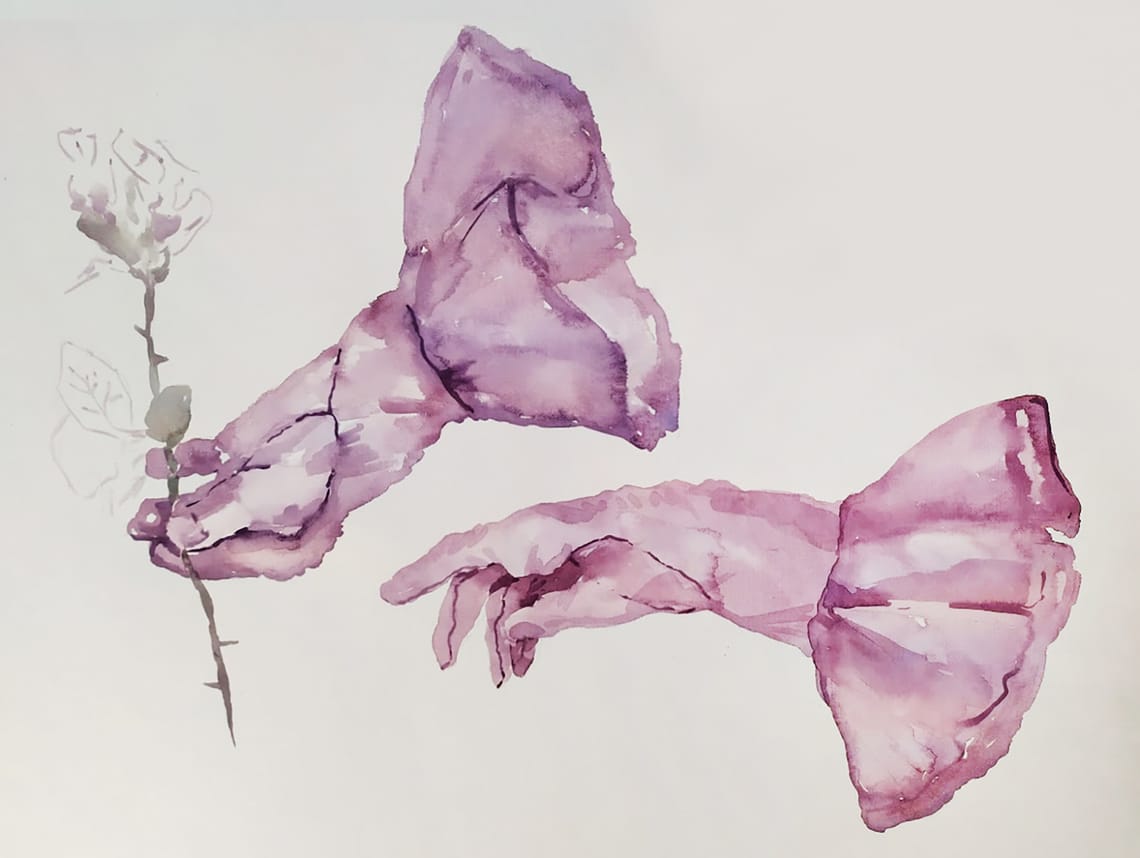
These sensory memories evoke a gentle, melancholic solitude from my childhood. Perhaps that is why many of the characters I paint often appear alone. Some hold friends in their hands, and through imagination, they never feel truly lonely.
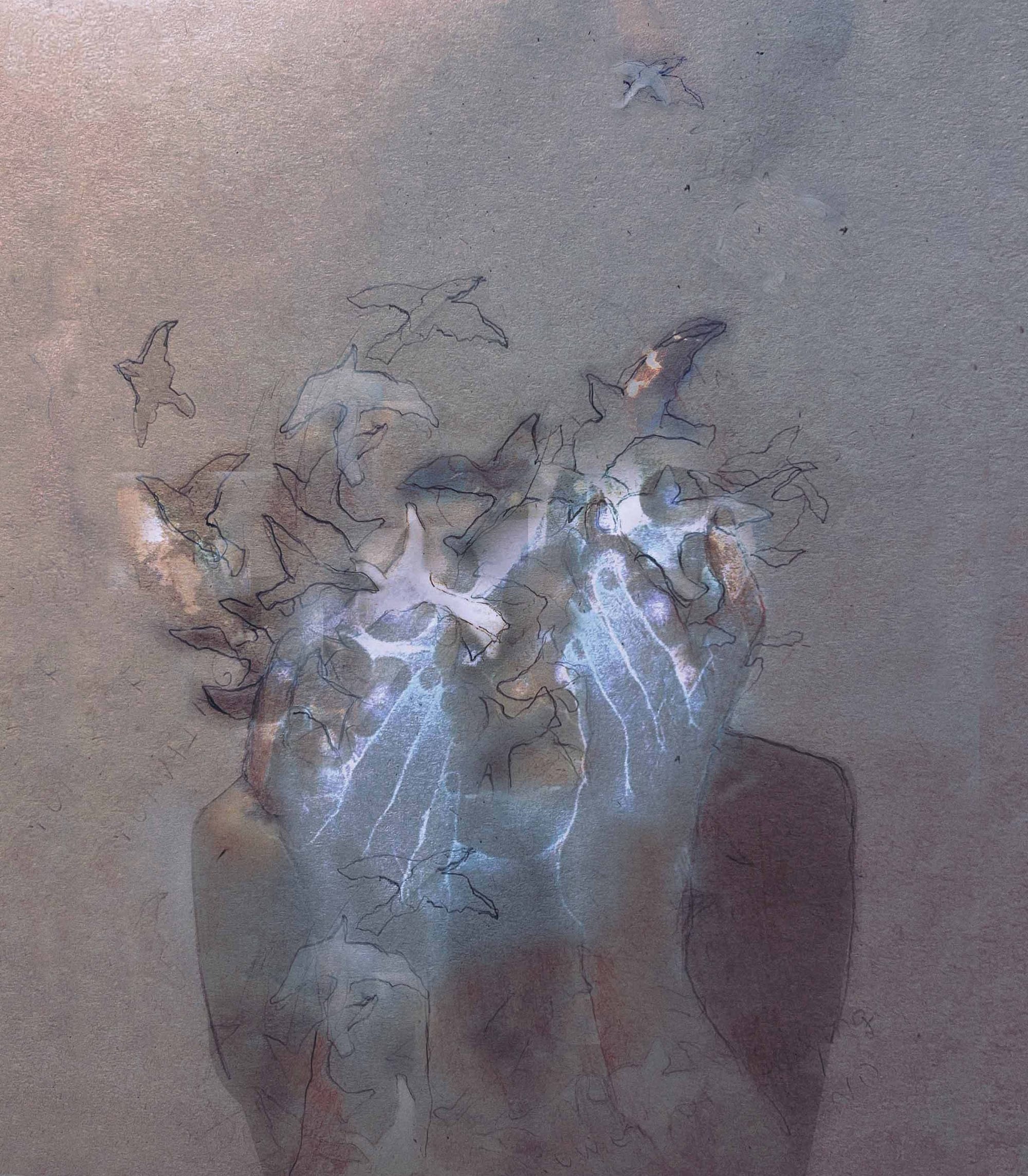
Reflecting on your childhood in your hometown, which specific moment or memory stands out to you the most, and how does it inspire your artistic expression today?
When I spent summers in Racha with a childhood friend, near the forest, crickets, and waterfalls, in an old, real village house — no electricity, no running water — we would read books by candlelight when we ran out of things to talk about.
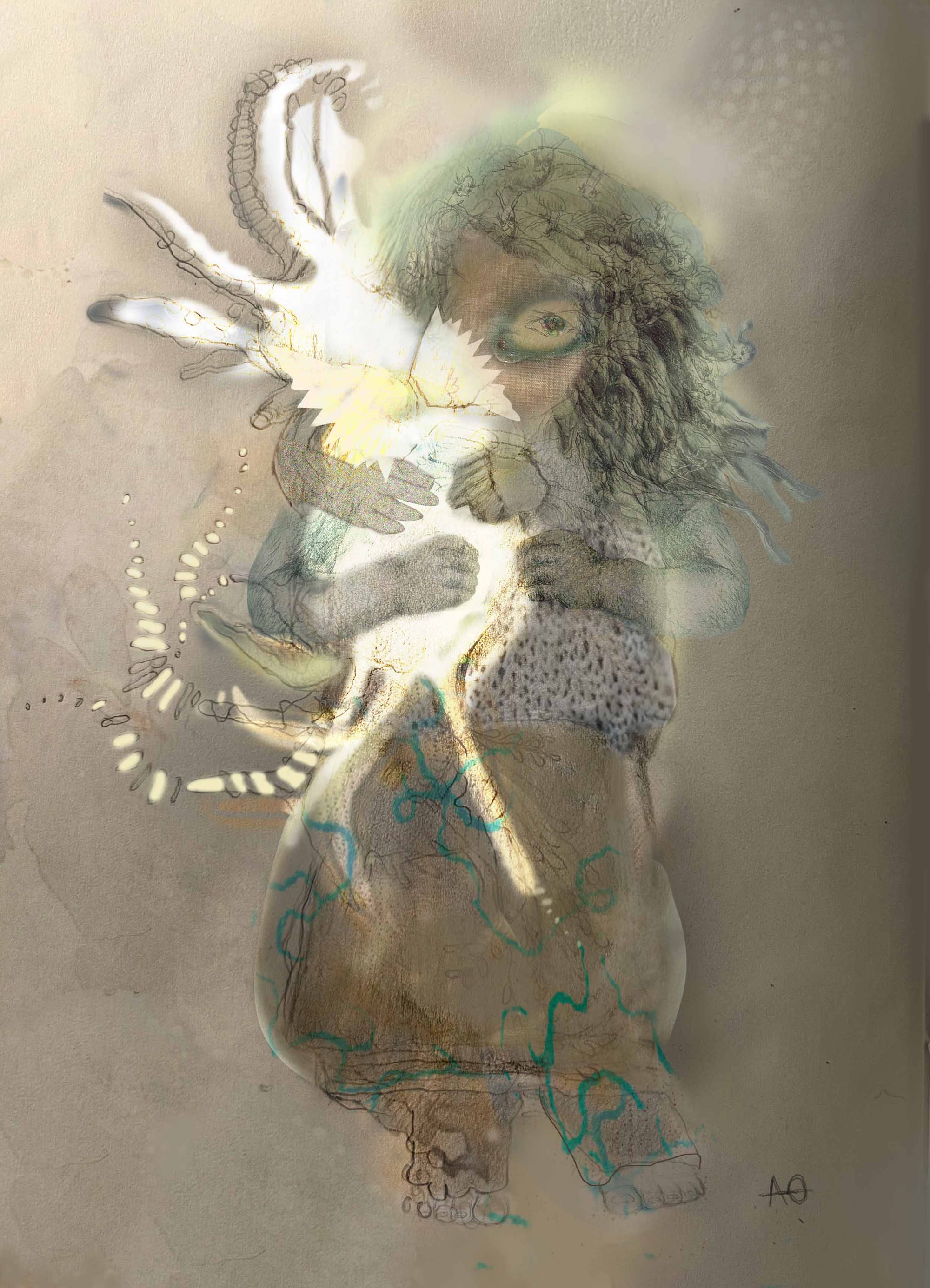
I was reading The Chronicles of Narnia, a story about a magical world, and being so close to nature amplified my perception — I could no longer see plants, grass, or trees as ordinary; everything seemed magical. In the book, one of the characters, Lucy, enters a wardrobe and disappears into the magical forest of Narnia. Inspired by this, I later chose my artist name, Ann_Is_Lost, reflecting Lucy’s lost journey into the forest. Of course, the name can be interpreted in many ways.
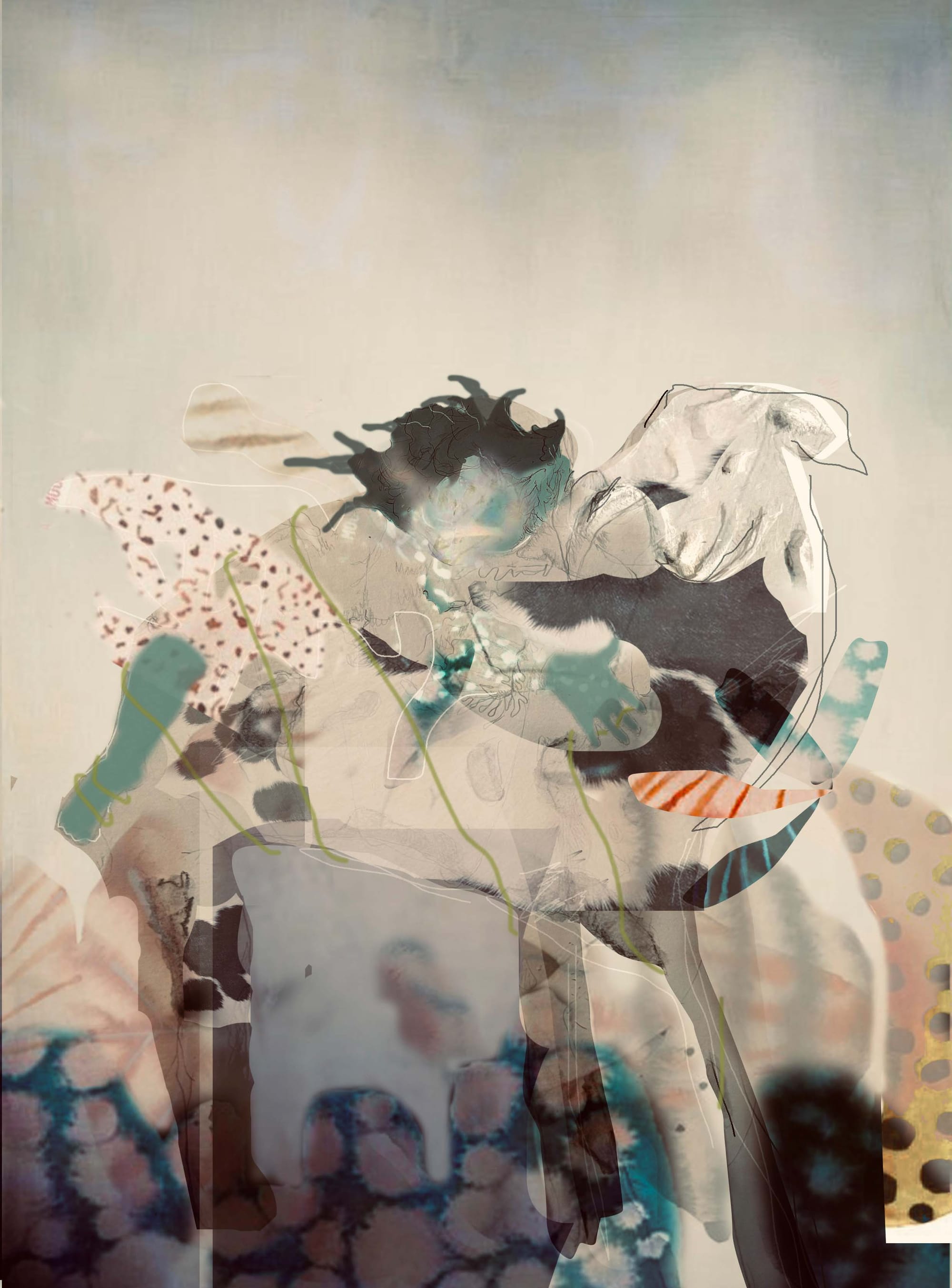
Imagine your hometown as a color palette. What hues dominate the landscape, architecture, and overall ambiance, and how do they influence your artistic choices?
Gray — when I walk through the streets and look into people’s eyes.
Pastel pink — soft and settled, when I think about love.
Golden hour — the buildings bathed in golden light make Tbilisi look the most beautiful to me, sometimes with the color of apricots.
Lavender — when I think about friends and the laughter we share.
If you could collaborate with any artist, living or dead, who would it be and why?
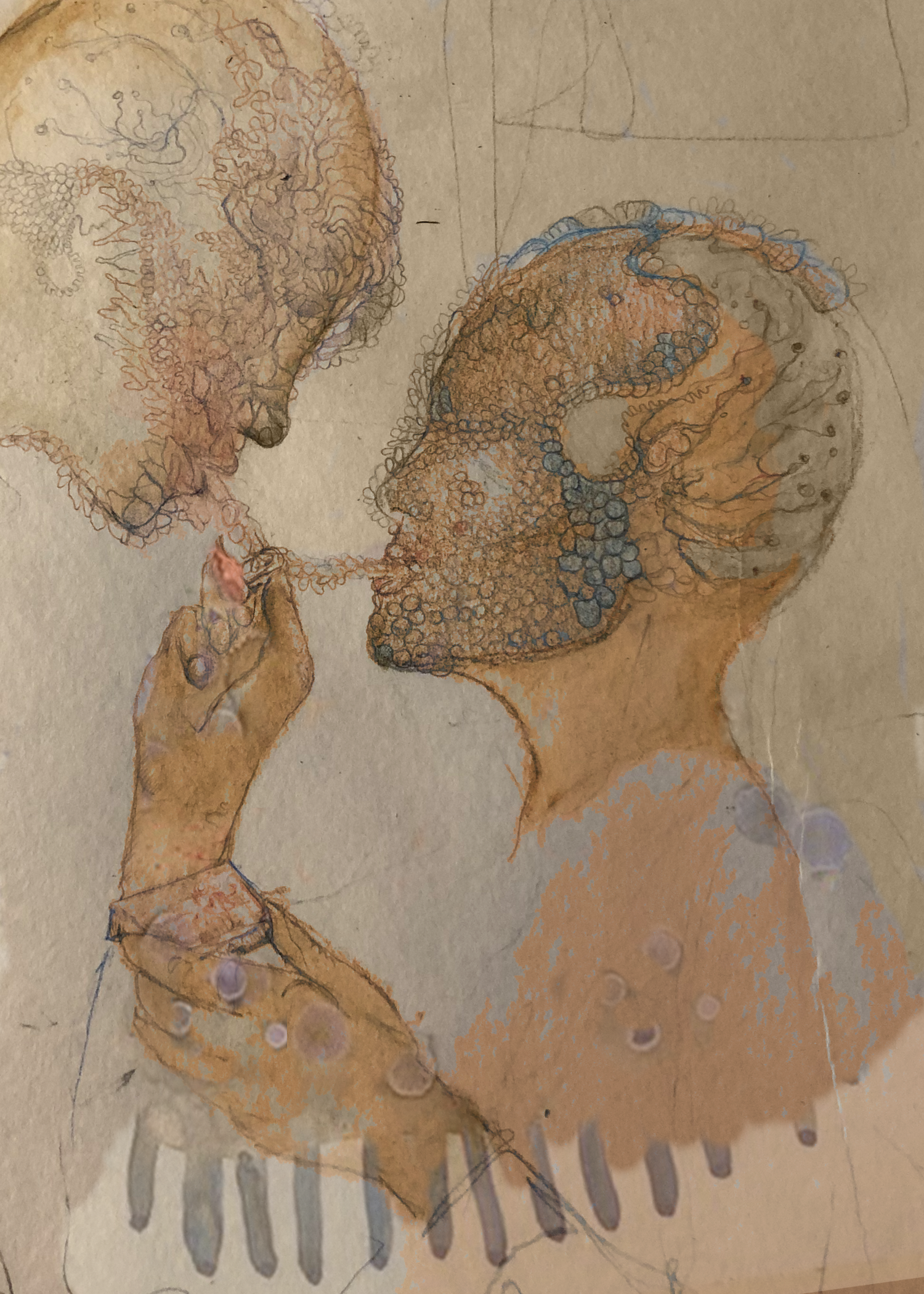
Hmm… should I be completely delusional? I would collaborate with Hayao Miyazaki at Studio Ghibli. I love everything in his work — the landscapes, the characters, the soundtracks… Studio Ghibli itself was inspired by Hasui Kawase’s works, and in my perception, it brings the energy I love most — peace, simplicity, the slowing down of time. When you don’t need anything extra, you are happy just with a small thing. —I think his philosophy is so close to my approach to life.
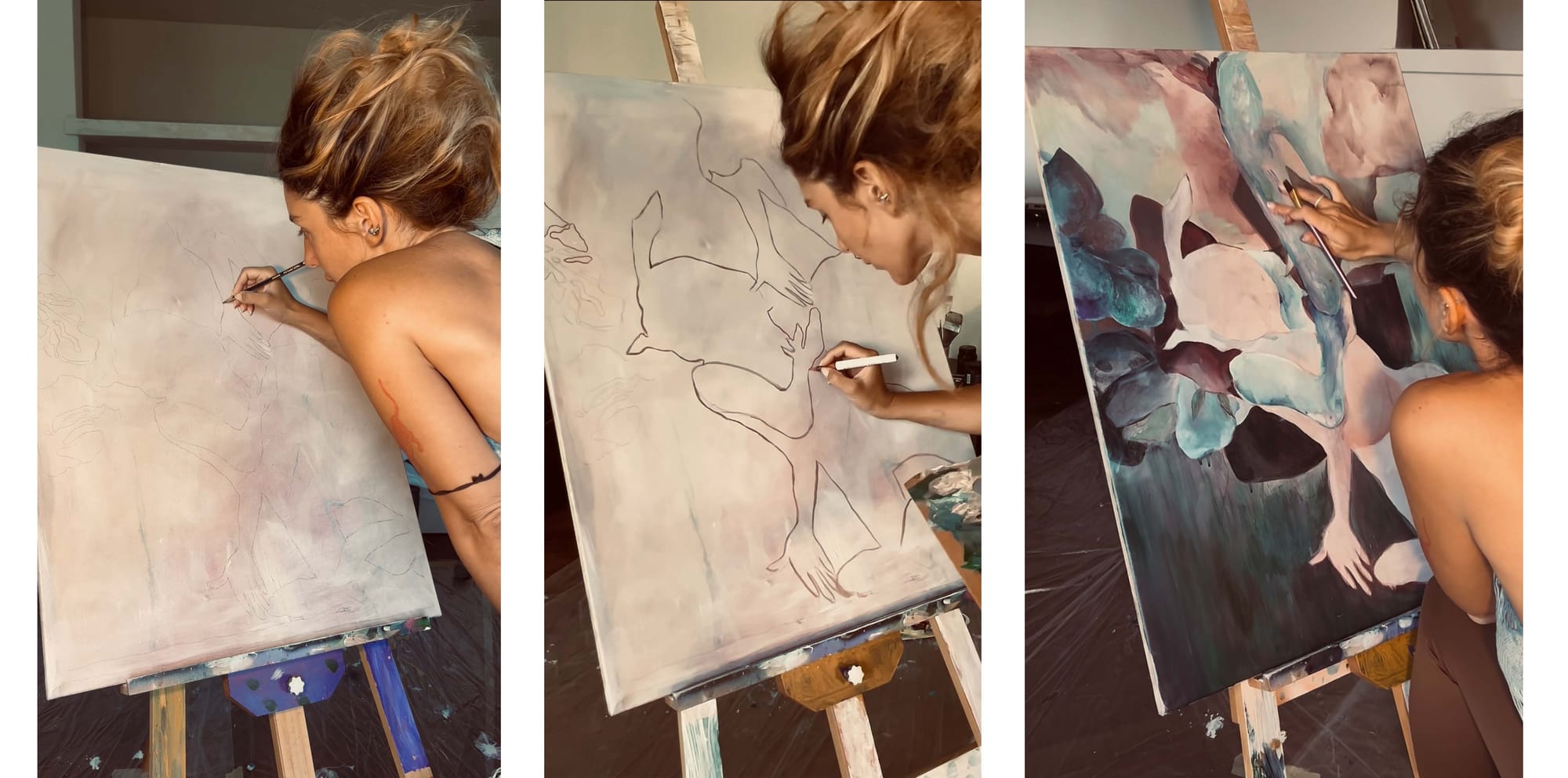
Imagine your art as a recipe. What ingredients would it have, and what would the final dish taste like?
Vanilla, milk, sweetness…
Orange with coffee cream.
Sometimes, just nuts, like almonds, accompanied by black unsweetened coffee — and it doesn’t become a full dish, it stays right there, simple and incomplete.
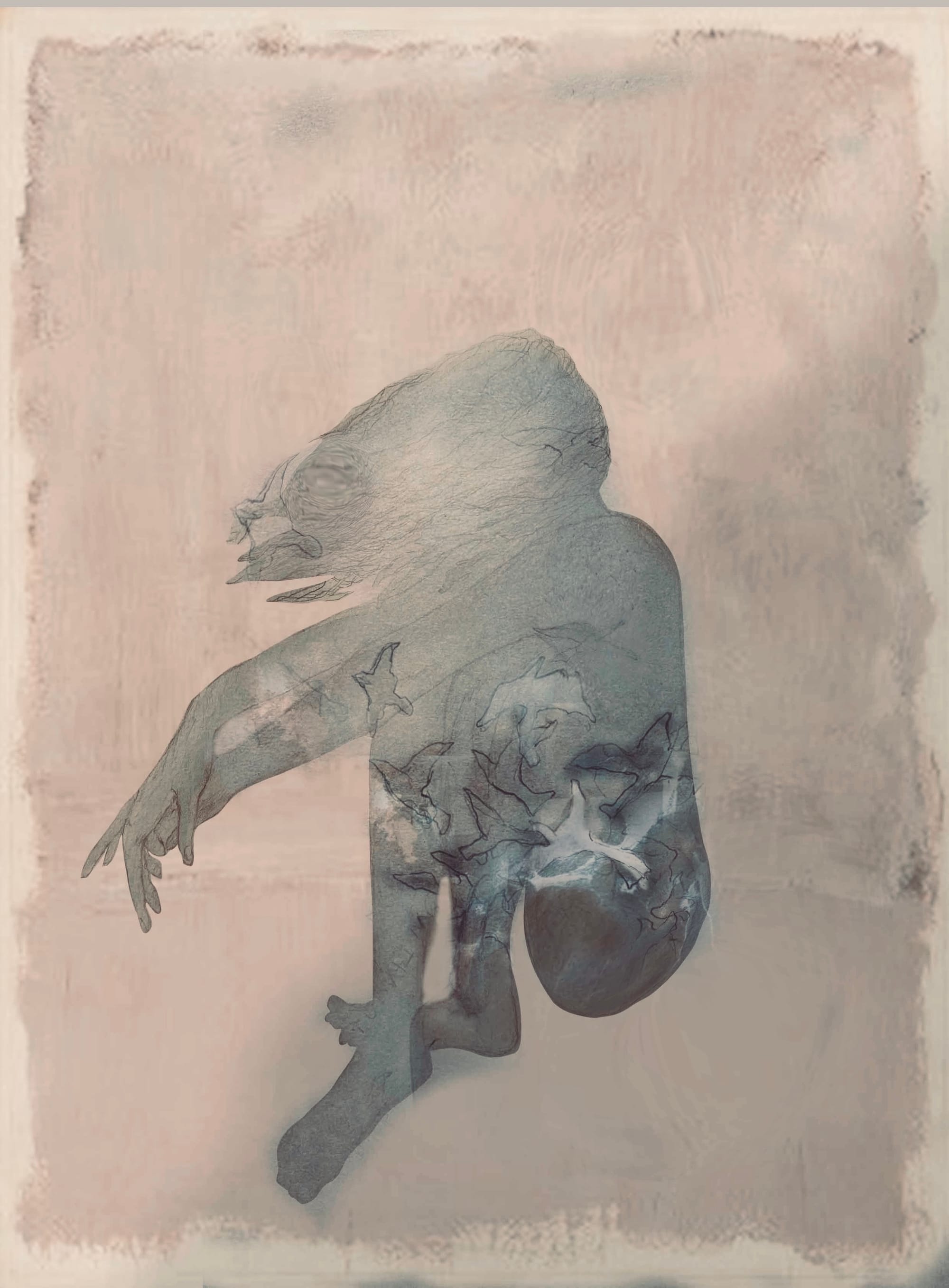
If your art could change one thing about the world, what would it be?
If your art could change one thing about the world, what would it be?
If I could, I would slow down time — just enough for people to rediscover the beauty of simplicity.
To pause and truly feel the rhythm of breathing, the joy of reading, the excitement of discovering new music, feeling sunlight on our faces…
To smile at a stranger, to reconnect with our inner child.
To lift each other up — especially women supporting women.
It makes me genuinely happy to see that this is already happening, that more and more women are standing for each other, cheering, creating, and growing together.
Celebrating one another instead of competing.
So, if my answer goes beyond changing just one thing, I would simply say:
I wish for more empathy and support in the world.
To find joy simply in being.